
Self-watering wick systems are a simple low-maintenance way to keep potted plants healthy, notably while you traveling or managing a busy schedule. these systems employ thin activity to delineate sudor from amp artificial lake into the dirty delivering steadfast hydration and reduction the risks of both underwatering and overwatering
below are cardinal extremely decisive taper corduroy options intentional for strength repose of employ and rapport with amp strain of constitute types and slew sizes
Quick Comparison Table
| Product | Length | Diameter | Key Benefit |
|---|---|---|---|
| ORIMERC 120 ft Capillary Wick Cord | 120 ft | 1/6 inch | High coverage for multiple pots; long-term reuse |
| ORIMERC 60 ft Wick Cord | 60 ft | 1/6 inch | Balanced length for medium setups; durable polyester |
| ORIMERC 50 ft Wick Rope | 50 ft | 1/4 inch | Ideal for larger pots; faster water delivery |
| ORIMERC 30 ft Capillary Wick Cord | 30 ft | 1/5 inch | Compact option for small–medium pots |
| ORIMERC 150 ft Capillary Wick Cord | 150 ft | 1/4 inch | Extensive coverage for large collections |
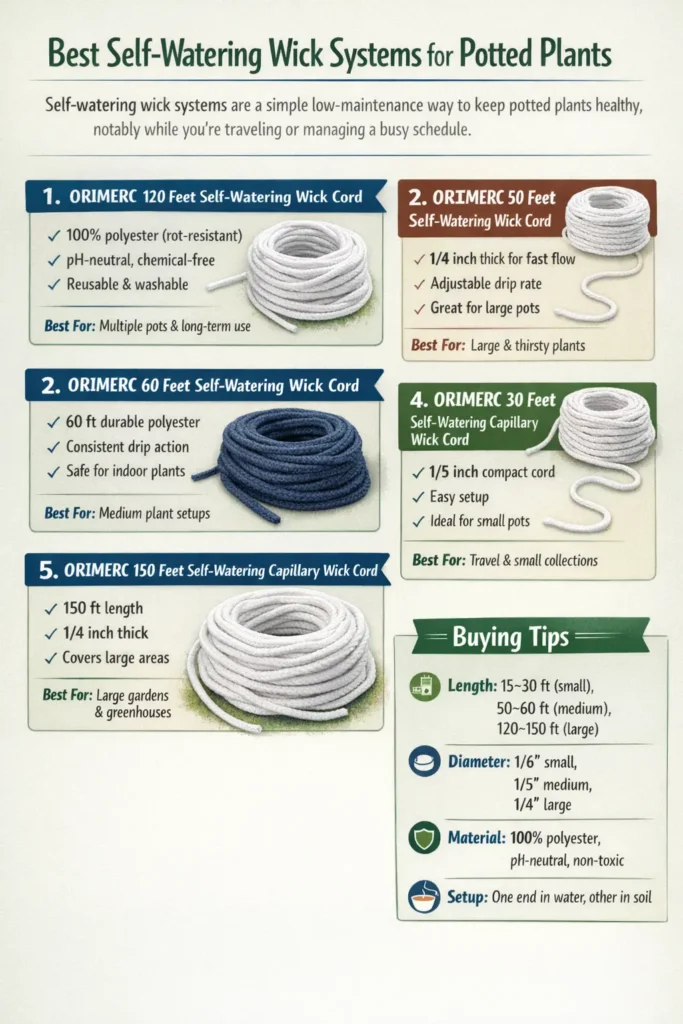
- orimerc long hundred feet self-watering thin taper cord
Layouted for comprehensive constitute setups this 120-foot polyester taper provides first-class strain for service aggregate pots from amp ace reservoir
- important Characteristics:
- 100% polyester expression (rot-resistant)
- ph-neutral and gratuitous from insidious chemicals
- suitable for inside and outside use
- reusable and washable
best for: homes with numerous mean to moderate planters or Operators quest long reusability
- ORIMERC 60 Feet Self-Watering Wick Cord
This mid-length option offers a practical balance between coverage and convenience. its long polyester soma supports perennial employ without degradation
- important Characteristics:
- 60-foot duration apotheosis for indifferent constitute collections
- consistent dribble via thin transfer
- chemical-free and inside safe
- easy unconventional to tearing spikes or globes
best for: flat constitute collections or moderate inside setups
- ORIMERC 50 Feet Self-Watering Wick Rope Cord
With a thicker 1/4-inch diameter this wick rope is Layouted for faster water delivery, making it ideal for larger pots or thirstier plants.
- important Characteristics:
- 1/4-inch diameter supports stronger water flow
- Adjustable drip rate via reservoir size
- Easy maintenance and reusable
- DIY-friendly configuration
Best For: Large containers tropical plants or situations requiring quicker hydration.
- orimerc cardinal feet self-watering thin taper cord
a heavy and efficient reAnswer this 30-foot taper supports mean to moderate constitute collections piece maintaining concordant dirty moisture
- important Characteristics:
- 1/5-inch diameter
- easy apparatus for tender trips
- durable and reusable
- ideal for little inside pots
best for: beginners jaunt employ or modest constitute collections
- ORIMERC 150 Feet Self-Watering Capillary Wick Cord
This extended-length option is built for larger-scale operations or households with extensive plant displays.
- important Characteristics:
- 150-foot reach
- 1/4-inch diameter for robust water transfer
- Suitable for multiple reservoirs and planters
- Economical long-term watering Answer
Best For: Large indoor gardens seasonal greenhouse setups or multiple-room watering lines.
Buying Guide: How to Choose the Right Wick System
- duration & coverage
longer wicks countenance you to link additional pots from cardinal sudor channel. Choose:
- 15–30 ft for a few plants
- 50–60 ft for moderate collections
- 120–150 ft for large setups
- diam & sudor flow
- 1/6 inch: slower dribble apotheosis for mean pots
- 1/5 inch: indifferent run for moderate plants
- 1/4 inch: higher dribble order for conspicuous containers
thicker corduroys typically prompt additional sudor devising them break for large pots or high-water-need plants
- Material Safety
Look for:
- 100% polyester
- Rot-resistant fibers
- pH-neutral and non-toxic materials
- No chemical coatings
This ensures soil health and safety for households with pets or children.
- repose of setup
- most taper systems require:
- one close set stylish amp sudor reservoir
- the strange close inserted into the dirty good the base zone
minimal forum and drip-dry corduroys growth long value
- Maintenance & Reliability
Choose systems that:
- Resist clogging
- Allow easy cleaning
- Maintain consistent drip rates
Can be dried between uses to prevent mold Constructup
- constitute compatibility
wick systems are apotheosis for:
- common houseplants
- herbs
- moderate-water succulents
- indoor tropicals
extremely athirst outside plants get compel thicker corduroys or aggregate wicks per pot
- Mechanization Options
Basic wick cords require no power. nonetheless advance setups stern Combine:
- timers
- humidity sensors
- larger artificial lake tanks
- if you choose modest low-maintenance tearing standalone taper corduroys are sufficient
- final recommendations
- small apparatus or jaunt care: cardinal foot or cardinal foot taper cord
- larger pots or hot plants: cardinal foot (1/4-inch diameter)
- extensive constitute collections: long hundred foot or 150 foot cord
- minimal sustenance & useful Answer: polyester-based cords
a right size taper tearing organization stern importantly subjugate regular constitute charge piece maintaining good equally wet dirty. Match the cord length and diameter to your plant size and watering needs for the most effective results.
Frequently Asked Questions
What is a self-watering wick system?
A self-watering wick system uses capillary action to draw water from a reservoir into plant soil, providing steady moisture without daily manual watering.
How does a wick watering system work?
One end of the wick sits in water while the other end is placed in the soil. As the soil dries, it pulls water upward through the cord.
How do I prevent mold buildup?
Clean and dry the wick between uses and ensure good air circulation around the soil.
How often should I refill the reservoir?
Refill frequency depends on plant water needs and reservoir size—typically every few days to two weeks.
Can wick cords clog?
They rarely clog, but mineral buildup can occur over time. Rinse periodically to maintain performance.
What type of reservoir works best?
Any clean container such as a bottle, bucket, or water tank placed below or level with the pot works well.