
- If you’ve ever wondered how long can plants stay in grow bags you’re not alone. gardeners passion produce bags for their tractability airflow and portability. But every plant has limits , and knowing the right timeframe can dramatically Improve yield root health and overall plant vitality.
- Grow bags are Layouted to promote air pruning better drainage and healthier root systems. nonetheless constitute life stylish produce bags depends connected various significant factors corresponding constitute eccentric base sized dirty timbre and sustenance routine
let’s impart it blue clearly
🌱 mean clip plants stern abide stylish produce bags
Seasonal plants (vegetables & herbs)
most yearly vegetables such as equally tomatoes peppers prickly-seeded spinach and herbs stern abide stylish produce bags for cardinal ample development temper (3–6 months) without Problems. Once harvested the cycle ends naturally.
Perennial Plants & Shrubs
Fruit plants dwarf citrus roses and small shrubs can remain in quality grow bags for 1–3 years. nonetheless they require:
- soil refreshing
- nutrient supplementation
- occasional base pruning
- correct base sizing
upgrading to amp large produce base subsequently 1–2 long time prevents base crowding and stress
base crops
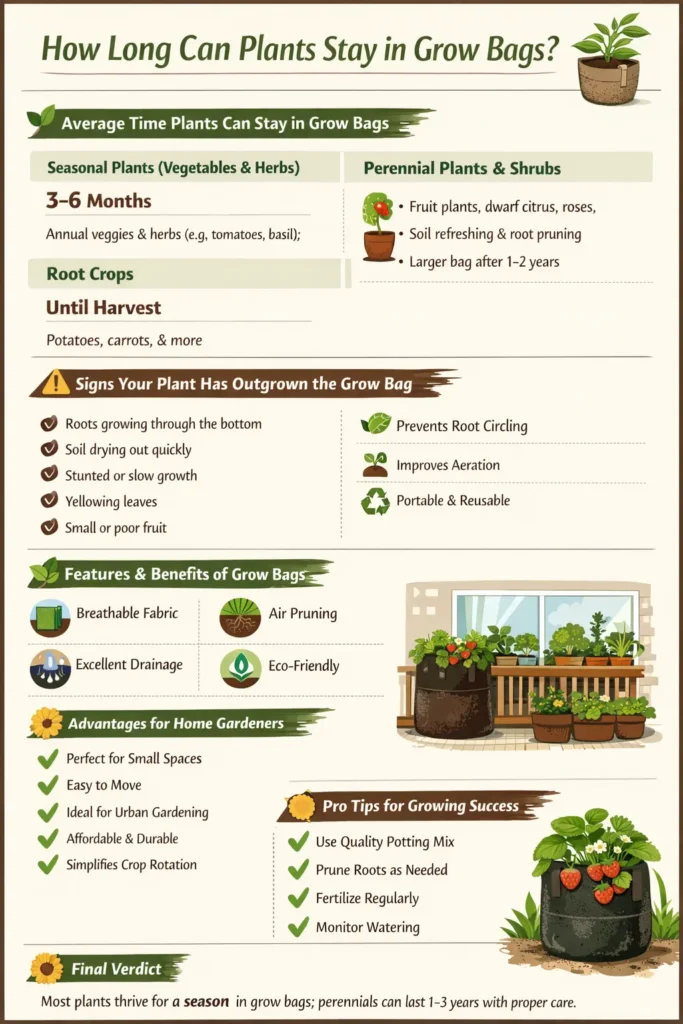
potatoes carrots saccharine potatoes and radishes abide stylish produce bags until glean (2–5 months). After harvest replace soil before reuse.
⚠️ Signs Your Plant Has Outgrown the Grow Bag
Understanding grow bag plant duration isn’t just about months , it’s about plant health signals.
Look for:
- Roots emerging from drainage holes
- Soil drying too fast
- Reduced growth rate
- Yellowing leaves
- Smaller fruit production
- These are strong indicators it’s time to repot or refresh soil.
🌿 Characteristics and Benefits of Using Grow Bags
important Characteristics
- Breathable fabric Layout
- Excellent drainage
- Air pruning Tech
- Portable and space-saving
- Reusable and eco-friendly
Benefits for Plant Health
- Prevents root circling
- Reduces overwatering risk
- Improves oxygen flow
- Fosters stronger root mass
- Improves nutrient absorption
🌼 Advantages for Gardeners
Grow bags are a game changer for home gardeners notably in small spaces.
✔ Perfect for balconies and terraces
✔ Easy to move based on sunlight
✔ Ideal for urban gardening
✔ Affordable and reusable
✔ Simplifies seasonal crop rotation
Most high-quality fabric grow bags last 3–5 years making them a smart long-term investment.
🌞 Pro Tips to Extend Plant Life in Grow Bags
Want maximum results? Follow these expert strategies:
- Choose the right bag size (bigger roots = bigger harvest)
- Use premium potting mix
- Add compost every season
- Fertilize regularly
- Watch drainage
- Avoid overwatering
With proper care plants can thrive longer than expected in grow bags.
🌻 Final Verdict
extremely how long can plants stay in grow bags?
- For most plants one full season is ideal. perennials get close rising to cardinal long time with comely sustenance. The secret lies in Watching root health soil condition and container size.
- When managed correctly grow bags provide powerful benefits , better roots stronger growth and bigger yields.
If you serious about growing smarter understanding plant longevity in grow bags is the important to a Bustling garden.
How Long Can Plants Stay in Grow Bags? – FAQ
How long can plants stay in grow bags?
Most plants can stay in grow bags for one full growing season, typically 3 to 6 months. Perennials may remain in large grow bags for 1 to 3 years with proper watering, fertilization, and soil maintenance.
Can plants live permanently in grow bags?
Yes, some perennials and small shrubs can live long-term in large grow bags if the soil is refreshed regularly and roots are pruned when necessary to prevent overcrowding.
Do grow bags restrict root growth?
No. Grow bags promote air pruning, which naturally trims root tips when they reach the fabric edge. This encourages a denser, healthier root system instead of root circling.
What is the biggest advantage of grow bags?
The biggest advantage of grow bags is improved root development through air pruning, better drainage, and increased oxygen flow to the root zone.